
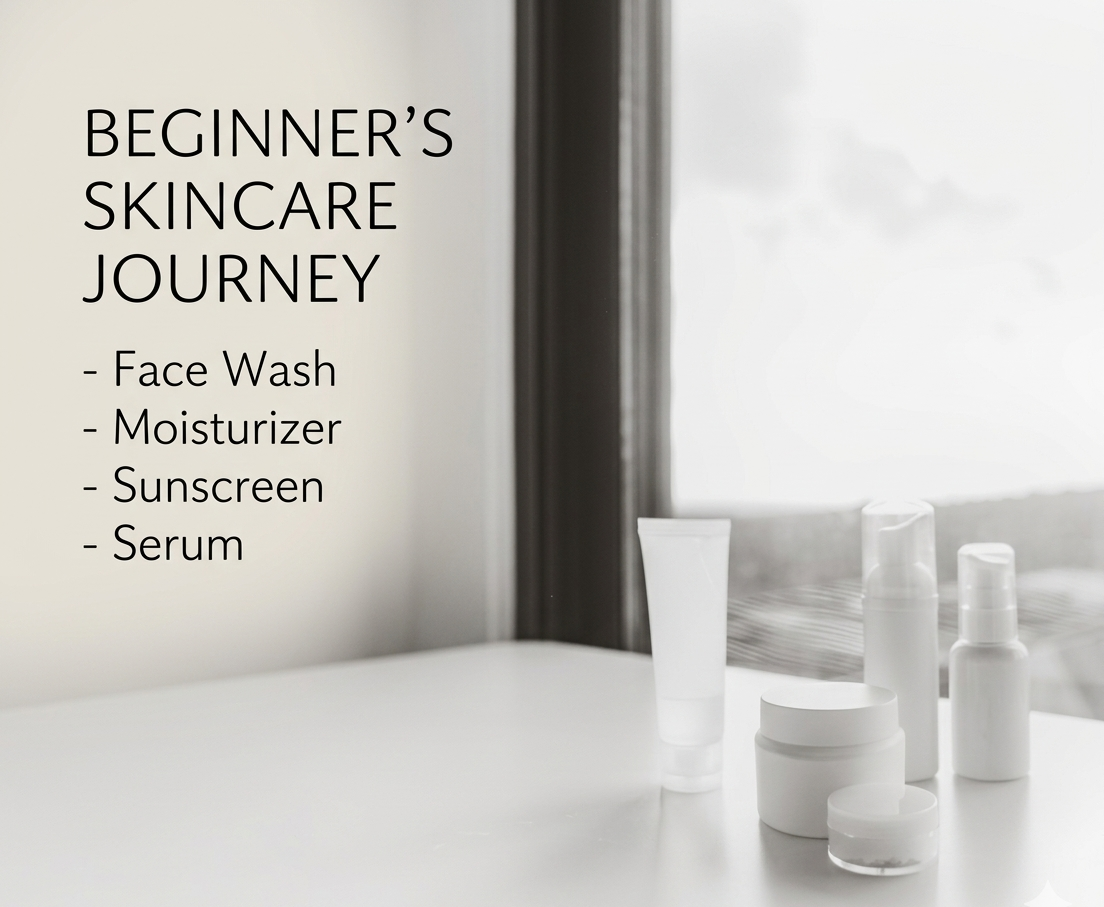
Creating a good skincare routine for beginners can seem very challenging because there are many products and even more steps. Moreover, almost everyone has something to say about the topic, and their opinions are very contradictory.
However, it should be noted that a successful skincare routine should be rather simple. Indeed, the simpler the routine, the easier its implementation becomes. This guide breaks it down into an easy-to-follow 5-step process that you’ll repeat every morning and again every evening. It will discuss all aspects of skincare from scratch. It will be interesting for both oily and dry skin types.
Why Does a Skincare Routine for Beginners Matter?
Now that the basic principle has been stated, let us move on to the process. However, it should be noted beforehand that skincare products have their own order, which makes them most effective.
The general idea behind this order is quite clear. Start with light and finish with heavy. Apply those products that contain light formulas first in order to ensure their better absorption. Apply heavier ones at the end as they seal other substances.
In case you start with applying a cream and then add serum on top of that, the latter would simply fail to reach your skin due to its heaviness.
Know Your Skin Type First
Even before you pick up a single beauty product, you must be able to identify your skin type. Applying products that do not suit your skin type is among the worst beginner mistakes.
Here’s an easy method for doing that. Cleanse your face using a mild cleanser, then wait 30 minutes without putting on any other product. Next, check your skin condition.
If your skin feels shiny or greasy on the forehead and nose areas, then it is oily. If it feels tight, rough, and flaky, it is dry. The combination skin type feels greasy in the T-zone and either normal or dry in the cheeks. A comfortable feeling means that your skin is normal. Sensitive skin reacts easily to any product applied.
Now, once you find out your skin type, it will be easy to create a skincare routine for beginners.

The Basic Skincare Routine for Beginners: Morning Steps
For a deeper dive into evening skincare, check out our Morning Skincare Routine guide.
Step 1: Face Cleanser
Begin each morning with face cleansing. Your face accumulates oils and bacteria while sleeping at night.
Oily and combination skin require a gel-type face cleanser. If you have dry or sensitive skin, choose a face cleanser based on creams or milk bases. Never wash your face with hot water. Hot water destroys the skin barrier, leading to increased dryness and irritation.
Step 2: Toner (Not Necessary but Useful)
Toner is the second step of the face skincare routine. Toner contains a light substance used right after cleansing the face. Its main purpose is to balance the pH of the skin and prepare your skin for further moisturizing and applying other products.
Avoid alcohol-containing and highly fragranced products. Instead, focus on alcohol-free toners that contain substances such as hyaluronic acid or niacinamide. Though a toner is an important part of skincare for advanced users, for beginners it’s optional.
Step 3: Serum (Target Your Main Concern)
Serum is a highly concentrated product that is meant to tackle any particular skin issue. This step is all about customizing your skincare routine based on the skin issues that need to be solved.
If your goal is to combat dullness, pick the products containing vitamin C. If dehydration is what worries you, choose those that contain hyaluronic acid. To help with uneven skin tone and large pores, niacinamide would work great. Salicylic acid is recommended for acne-prone skin.
As a skincare newbie, pick just one serum and focus on your main problem.
Step 4: Moisturizer
All skin types require a moisturizer, even oily skin. Neglecting this important step will cause your skin to produce excess oil to hydrate itself.
Oily skin should use a gel moisturizer, dry skin should use cream moisturizers, and sensitive skin should use fragrance-free products with ceramides or oat extract.
Moisturize after cleansing your face, but while your skin is still slightly damp.
Step 5: Sunscreen (Non-Negotiable)
Sunscreen is the most critical step in any skincare routine. Sunscreen shields your skin against UV rays and also slows down the signs of aging and prevents skin discoloration.
Apply a sunscreen of SPF 30 or higher daily without fail; apply it on sunny days and cloudy days alike. Apply it indoors when you have a window facing you.
If you are new to skincare, a multi-functional sunscreen that acts like a moisturizer might be helpful. Look out for mineral sunscreens with zinc oxide.
The Basic Skincare Routine for Beginners: Night Steps
Your evening skincare is where the repairing work actually takes place. Your skin repairs itself when you sleep, and that is where the magic happens. Here are the products to help your skin with that process. For a deeper dive into evening skincare, check out our Night Skincare Routine guide
Step 1: Makeup Remover or Cleansing Oil
If you use makeup or sunscreen, you should remove it first with the help of micellar water or cleansing oil. Double cleansing will ensure that your face is clean.
Step 2: Gentle Cleanser
Use your regular gentle cleanser to prepare your skin for the following steps.
Step 3: Alcohol-Free Toner
As mentioned above, same as during your morning skincare routine, use your alcohol-free toner.
Step 4: Treatment or Serum
It is best to apply intensive treatment products during the night hours since at this time your skin undergoes repair processes and it is not exposed to any sunlight. Retinol is one of the most effective substances for anti-aging and should be applied during the evening hours. If it is your first experience using retinol, it is better to opt for the weakest product and to apply it once or twice per week to allow your skin to get used to it. Peptides, niacinamide, and AHA exfoliants are also great products for evening application.
Step 5: Moisturizer
Use a little bit more nourishing cream during the night than in the morning, since during the night hours your skin loses much more moisture.
Top Ingredients for a Skincare Routine for Beginners To Get Started
There is no need for you to familiarize yourself with all skincare ingredients. You just have to focus on these safe and effective ingredients.
Hydroxy acids attract water to your skin, keeping it hydrated. Hyaluronic acid is good for every skin type and very gentle. Niacinamide reduces oil production, helps minimize pores, soothes any redness, and improves skin tone. It’s one of the best ingredients out there for versatility. Ceramides reinforce the skin barrier, which prevents dehydration. This ingredient is best for dry and sensitive skin. Vitamin C lightens skin, reduces dark spots, and fights against free radical damage. Apply vitamin C in the mornings. SPF protects against sun damage. It’s non-negotiable for every skin type.
Ingredients Beginners Should Avoid
There are some ingredients that beginners and people who have specific skin types should avoid.
Beginners should not use highly concentrated amounts of AHAs and BHAs since they may result in peeling and irritation with excess use. Newbies should also be careful with fragranced products, especially if you have sensitive skin, because fragrances cause a lot of skin irritation. You should also avoid using alcohol toners and astringents because they remove all the moisture from your skin and irritate it.
Common Mistakes by Beginners
This segment is usually neglected by other guides, but this is perhaps the most valuable advice for beginners.
Experimenting with too many products at once. If you try introducing different products simultaneously and then react, there is no way of knowing which one was the cause. Always introduce products one at a time and give it at least two weeks before trying another.
Lack of sunscreen. This is probably the most common mistake and certainly the most damaging one, as there is nothing that could repair the damage done to your skin by sun exposure. Make SPF a must for your daily routine.
Overscrubbing. More than two washes a day removes natural oils from the skin and weakens its protective barrier. One or two washes a day should suffice for everybody.
Thinking the changes will be immediate. Skincare is about patience. Any skincare product requires around four to six weeks to show any result.
Neglecting moisturizers in oily skin types. Just because skin is oily does not mean that it is adequately hydrated. In fact, dehydration leads to increased oil production. Use a light-weight gel moisturizer.
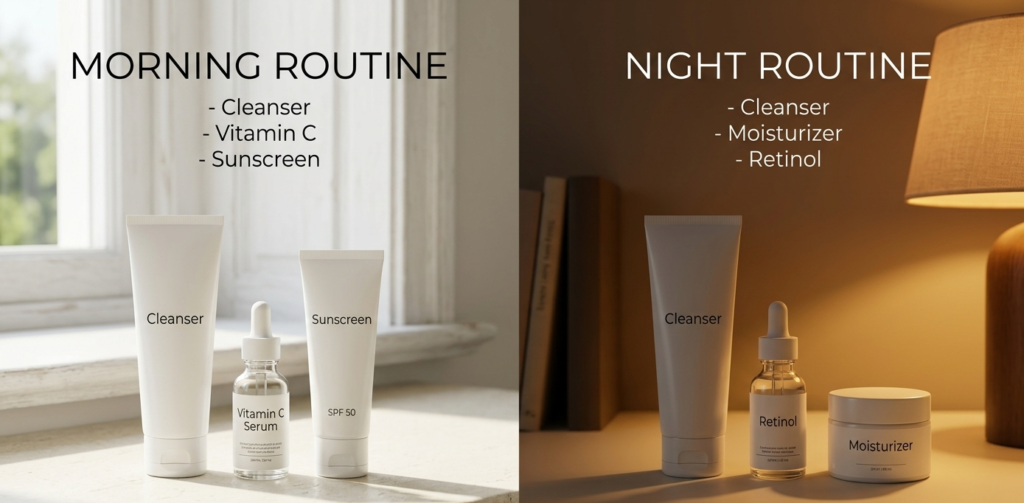
Quick Reference: Morning vs Night Skincare Routine for Beginners
| Step | Morning | Night |
| 1 | Cleanser | Makeup remover or cleansing oil |
| 2 | Toner (optional) | Cleanser |
| 3 | Vitamin C serum | Toner (optional) |
| 4 | Moisturizer | Treatment serum or retinol |
| 5 | Sunscreen SPF 30+ | Richer moisturizer |
Conclusion on How to Build Your Skincare Routine for Beginners
A skincare routine for beginners doesn’t necessarily have to be too costly, complex, or demanding. Begin with the essentials, get to know what works for your skin, and then proceed gradually.
There are three essential things that need to be remembered. They include cleansing gently, using a daily moisturizer, and never forgetting to apply sunscreens. Other than those, everything else will fall into place eventually.
Remember that building an effective skincare routine takes patience; it’s all about getting to know your skin a bit more each day and making good choices. Just give yourself some time, and you’ll begin seeing improvements after a couple of weeks.
How many products should I use when just starting?
Start with three. A gentle cleanser, a moisturizer, and sunscreen. If your skin tolerates those well, slowly introduce a toner or serum after that.
Can I use the same products day and night?
Yes, you can use the same cleanser and moisturizer day and night. What changes is that your sunscreen and more active ingredients go only in the AM, while the latter go only in the PM.
How long will it take me to see any improvement from my skincare routine?
It usually takes between four and six weeks for most people. Certain issues such as hyperpigmentation and fine lines may take more time.
Is it necessary to purchase expensive skincare products?
No, there are many affordable drugstore products that have excellent ingredients just like the expensive ones. It is essential to consider the effectiveness of the ingredients.
What do I do if my skin breaks out after using a new product?
Immediately stop using the product until your skin is back to normal. Also, it is essential to patch test all your new products on the inside of your arm for at least one week.
Should I use the same skincare routine for summer and winter?
Not necessarily. It is better to use a moisturizer that has rich ingredients during the winter, while using a formula that has light ingredients and extra sunscreen in the summer.

Sobia is a skincare & wellness content writer at peacelove.info. She writes beginner-friendly, research-backed skincare guides that help everyday girls build simple routines for healthy, glowing skin.

Pingback: Men's Basic Skincare Routine: Only 3 Steps to Clear Skin