Introduction
Developing the proper skincare routine for oily skin is the very first and most crucial step towards having a clear, balanced, and shine-free face. They have washed their face in the morning; they feel comfortable for an hour or two, and by midday, their face starts to shine again.
Do you know someone who experiences such problems, or do you experience them yourself? It turns out that people who have oily skin comprise the biggest category among all other skin types. Unfortunately, they frequently misunderstand how to take care of themselves. Do not panic! Having the proper skincare routine for oily skin is an easy task. You do not have to follow some complex procedure and purchase extremely expensive products in order to look great.
The main thing you need is to use some products and techniques that really work for your skin. In addition, you need patience, as it will take time for you to achieve desirable results. Let’s find out more details now.
What Is Oily Skin and How Do You Know You Have It?
Oily skin results from excess production of sebum by sebaceous glands located in your skin. Sebum is an oily substance produced by your skin in order to protect itself and to keep hydrated. The trouble begins when the amount of sebum produced by the skin is more than its requirements and ends up depositing on the surface of the skin.
Not sure whether you have oily skin or another skin type? Read our complete guide on How to Know Your Skin Type and Care for It Right to find out.
The symptoms commonly associated with oily skin include a glossy appearance, the presence of large pores, blackheads or whiteheads, and breakdown of makeup after a few hours.
Oily skin appears glossy, even without wearing anything, and especially by midday, so if your skin becomes glossy in this case, then chances are you may have oily skin.
There are many causes of oily skin; genetics play a significant role, as you are more likely to inherit it if your parents had it. Hormonal changes during puberty, pregnancy, and the menstrual cycle increase sebum production.
A hot and humid climate, especially summers, results in the production of sebum. Surprisingly, the wrong choice of skincare products, especially those that irritate and dehydrate the skin, can make your skin over-produce oil.
Self-test for Oily Skin:
Cleanse your face and then leave it untouched for about half an hour. If your skin appears shiny in all areas, you probably have oily skin; but if it’s just your T-zone area that’s shiny while your cheeks are dry, then you could be dealing with combination skin.
Common Mistakes People with Oily Skin Make
Before we begin with the procedure itself, it is necessary to know what should be avoided. The majority of individuals having oily skin commit mistakes without even knowing about them; avoiding such mistakes is as equally important as adopting a new skincare routine.
Washing Your Face Too Many Times
This is the most frequent mistake made by individuals with oily skin. It seems quite sensible to think that if your skin is oily, you should cleanse it often. However, washing your skin excessively removes its essential oils, causing your skin to believe that it needs to secrete more oil.
Skipping Moisturizer
Oily-skinned individuals refrain from using moisturizers, assuming that they will only make their skin oilier. This is probably the most common myth related to skin care. When the skin lacks moisture, it tries to compensate for this lack of hydration by producing more oil. The use of an oil-free moisturizer would help regulate the condition of the skin.
Using Alcohol-Based Toners or Harsh Products
Toning products that contain high amounts of alcohol leave your skin feeling refreshed since they effectively remove the oil from your face. Nevertheless, this kind of product does not suit the condition of your skin, being too harsh for it. They deprive your skin of moisture and stimulate oil production.
Using Heavy Creams or Comedogenic Oils
Creams and oils such as coconut oil and olive oil are very heavy on your skin and will end up clogging your pores, leading to breakouts. Skin that is oily needs hydration, but this hydration needs to be lightweight and non-comedogenic. These are products that have been made with the intention of being non-pore-clogging
Skipping Sunscreen
Many people who suffer from oily skin do not use sunscreen, thinking that all sunscreens are greasy and make their skin look even more oily. Instead of skipping sunscreen, which results in sun damage and pigmentation of the skin and might even increase oil production, you need to choose your sunscreen carefully
Best Ingredients for Oily Skin
When buying skincare products for your skincare routine for oily skin, focus on ingredients rather than brand names. The following is the list of the best ingredients for people with oily skin and their benefits:
Salicylic acid (BHA) is one of the most effective ingredients for people with oily skin, and it helps clear clogged pores by removing dead skin and excess oil. This ingredient is used in cleansers, toners, and serums to eliminate blackheads and breakouts.
Niacinamide is a type of vitamin B₃, which regulates excessive oil production by the skin and reduces the appearance of pores, evening skin tone. Niacinamide is suitable for almost all kinds of concerns related to oily skin because it is very mild and can be used every day.
Hyaluronic acid provides lightweight hydration without making your skin feel oily or greasy. Hyaluronic acid hydrates skin by attracting moisture from the surrounding air and retaining it in your skin.
Glycerin is an effective humectant that provides moisturization. It is available in almost all cleansers and moisturizers.
Kaolin or bentonite clay absorbs the excessive sebum present deep within the pores of the skin, and hence, it is an essential component in most clay masks. The application of a clay mask once a week helps in cleansing the oily skin deeply without irritation.
Retinol accelerates the process of cell turnover; hence, the pores remain clear, the production of oil is minimized over time, and your skin becomes smoother. It should be applied at night, and those who are new to retinol should begin with a smaller dose.
Ingredients to avoid: coconut oil, mineral oil, lanolin, synthetic perfumes, and formulations with alcohol in excess.
Morning Skincare Routine for Oily Skin Steps
Following a proper skincare routine for oily skin in the morning is essential. The morning skincare routine must be based on getting the skin free from impurities. A good skincare routine for oily skin always starts with the right cleanser and preparing it to function well during the entire day. The sun and pollution exposure must also be taken into account. Let us discuss the steps in detail.
Step 1: cleanser
The morning skincare routine always begins with cleansing. In order to cleanse oily skin, you need to use a mild gel or foam-based product containing salicylic acid. It penetrates deep into the pores and gets rid of accumulated dirt and oil. Avoid using cream or milk-based cleansers at this time of the day, as they are intended for dry skin. Your skin is prone to excessive hydration, and thus, it may become greasy and clogged. Pre-soak your face in warm water prior to cleansing
Step 2: Toner
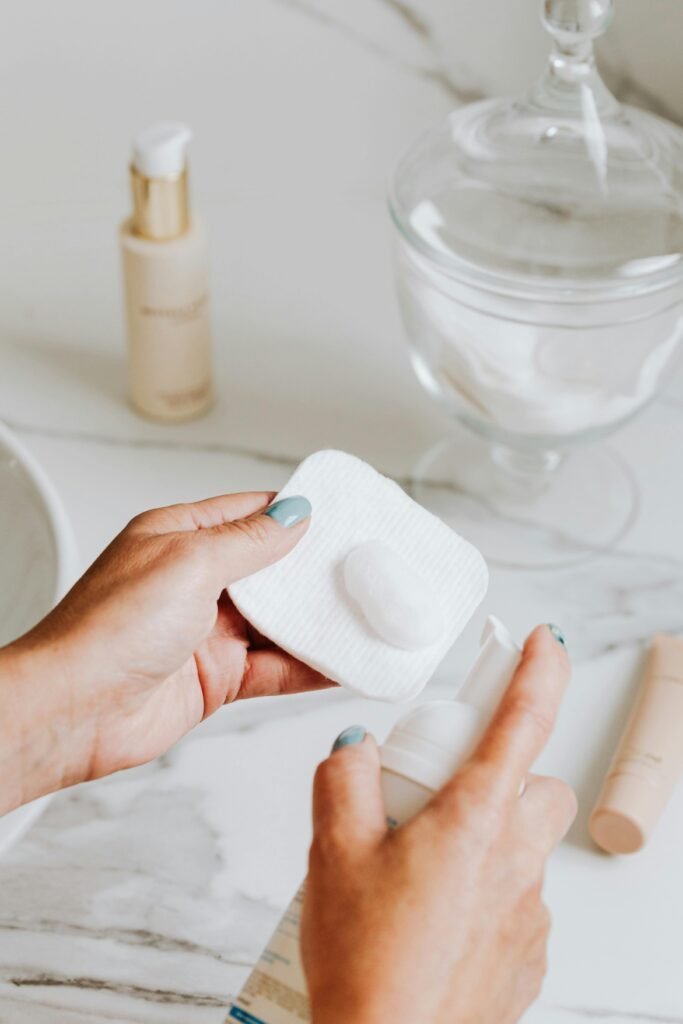
Once you have cleaned your skin, apply an alcohol-free toner. Some excellent ingredients in toners for oily skin include niacinamide and witch hazel. The toner with niacinamide regulates sebum, while witch hazel is effective at shrinking pores and does not dry out your skin. Simply use a cotton swab to apply it evenly to your face and neck. In case your skin feels tight after applying toner, then you might need to go for a gentler alternative.

Step 3: Serum
These products have a lighter formula and can tackle one specific skin problem. The best serums for oily skin are those with niacinamide to help reduce sebum and shrink pores or vitamins such as C to keep your skin protected and bright. Only apply a small quantity and do not rub your skin.
Step 4: Moisturizer
Yes, oily skin absolutely needs moisturizer. Skip this step, and your skin will produce even more oil to compensate. Choose a lightweight, oil-free, non-comedogenic moisturizer; gel-based formulas work great for oily skin because they hydrate without any heaviness and absorb quickly. Look for ingredients like hyaluronic acid, niacinamide, or glycerin. Apply your moisturizer while your skin is still slightly damp, as it helps seal in hydration more effectively.
Step 5: Sunscreen
Sunscreen is non-negotiable, no matter your skin type. For oily skin, look for a broad-spectrum SPF 30 or higher with a matte or dry-touch finish. Many sunscreens today are specifically formulated for oily and acne-prone skin and feel completely weightless on the skin. Apply it as the very last step in your morning routine, about 15 minutes before sun exposure. Mineral sunscreens with zinc oxide tend to be less greasy than chemical sunscreens and also have a natural mattifying effect.
Night Skincare Routine for Oily Skin
During this period, your skin undergoes most of its regeneration process. The night skincare routine for oily skin focuses on repair and deep cleansing. In fact, skin regeneration, healing, and absorption happen when you are asleep. Maintaining a consistent skincare routine for oily skin at night is just as important as your morning routine. Although the evening routine for oily skin can sometimes be slightly more intense than the morning routine, it remains as light and simple as possible.
Step 1: Makeup remover / Micellar water
If you use sunscreen or makeup throughout the day, which you certainly should do, then removing these substances before going to bed is an absolute must. Using micellar water or a gentle cleansing balm, your makeup and sunscreen will effortlessly melt off your face. This step is crucial, since leaving sunscreen or makeup overnight may clog your pores within days.
Step 2: Cleanser
Once your makeup is removed, cleanse your face using the same mild cleanser used in the morning routine. Double-cleansing helps ensure that all dirt is washed out of the pores. It’s very important to have clean skin in the evening to allow other products to be absorbed properly.
Step 3: Exfoliant (2 to 3 Times Per Week Only)
For oily skin, regular removal of dead cells prevents them from mixing with excess sebum and getting into the pores. However, daily exfoliation is definitely too much. Your skin will become irritated by such frequent cleansing; as a result, it will produce even more sebum.
Try to exfoliate only 2 to 3 times weekly using some chemical exfoliant (e.g., a BHA toner with salicylic acid or an AHA toner with glycolic acid). Chemical exfoliants are less irritating and much more effective than abrasive scrubs. It’s better not to use an exfoliant and retinol serum on the same day.
Step 4: Treatment Serum
The best time for using your strong treatment products is night since your skin is in repair mode. These active ingredients will be more effective when you don’t expose them to the sunlight. Retinol is a great product for oily skin. It increases cell turnover and helps keep your pores clear from excess sebum. When you try retinol for the first time, begin with a small concentration and use it only two nights per week. Niacinamide serum will suit you perfectly if retinol irritates your skin too much.
Step 5: Lightweight Night Moisturizer
The last step in your night skincare routine is a lightweight moisturizer. You can use stronger products in your night moisturizer than during the day. Ceramides and peptides in your moisturizer will help repair your skin barrier at night. Avoid heavy formulations. A gel-cream formula works perfectly for an oily skin type at night. No need to apply sunscreen at night because it will do nothing besides irritating your skin with its consistency.
Bonus Weekly Clay Mask
Use a weekly clay mask that uses either bentonite or kaolin clay. Clay is known to remove toxins from your pores and absorb the extra oil that builds up in them. You can apply this mask after you wash your face and keep it on for about 10-15 minutes before washing it off with warm water.
Skincare Advice for Oily Skin in Warm, Moist Weather
Those of you who live in warm and humid regions can testify that your skin is extra-oily during summer. The reason is that warm and humid weather increases sebum production, which means your skincare routine for oily skin will require some modification according to the season.
In summer, follow a simple skincare routine. There is no need to use a serum in the morning; you can simply wash, tone, moisturize, and apply sunscreen. Remember that fewer products should be used on your skin when the weather is extremely hot. Use a gel-based moisturizer if you have been applying lotion. Gels are more soothing and get absorbed quickly.
Carry blotting papers wherever you go. Blotting papers are very useful for managing oily skin in hot climates. If you feel oiliness in the middle of the day, place a blotting paper on the affected area and press it without rubbing the skin.
Rosewater without alcohol also makes for an awesome midday pick-me-up. Just spritz a small amount onto your skin and leave it to dry. It refreshes your skin, provides a mild hydrating effect, and helps diminish the oily residue without forcing you to restart your whole skincare process.
During winter, when your skin produces less oil and indoor heating dries it up, you may want to opt for a more nourishing yet non-oily moisturizer and limit yourself to fewer exfoliating sessions.
Conclusion
There is no need to look for solutions to the issue of oily skin because it is a matter of having an appropriate skincare routine for oily skin rather than overcoming a flaw. Following the recommended skincare routine with proper skincare products will help achieve beautiful skin that does not require constant touching up.
The routine suggested by dermatologists is straightforward to implement. It involves cleansing twice daily with a gel cleanser, applying a niacinamide toner, adding a thin layer of a serum, moisturizing your skin, and using a matte sunscreen in the morning.
The nighttime routine also includes using an exfoliant 2-3 times a week and a retinol serum after a few weeks of following the above routine.
Consistency will lead you to success in accomplishing what you have set out to achieve. It’s not all about the use of expensive or luxurious skincare products that have several steps, but following a good skincare routine for oily skin will bring results in a matter of weeks. Give the process enough time (4-6 weeks).
Should people having oily skin apply a moisturizer?
Of course, yes. It is the biggest myth surrounding oily skin. The absence of a moisturizer makes your skin dry, and your body starts making excessive amounts of oil. A light, non-comedogenic moisturizer will be good for balancing out your skin as well as minimizing the oil production gradually. Remember to always select a gel-based or water-based product.
How many times should I clean my face per day if I have oily skin?
Twice a day would be just enough. Clean your face once in the morning and once at night. Excessive cleansing makes your skin very dry and thus leads to increased oil production. For those moments when you start feeling greasy, use blotting papers instead of cleansing your skin once again.
Which is the best toner for oily skin?
Go for an alcohol-free toner that has ingredients like niacinamide and witch hazel. The niacinamide will reduce sebum secretion and reduce the appearance of pores, while witch hazel will shrink them. Be wary of toners with a lot of alcohol since they might give you immediate satisfaction, but they will worsen the skin condition in the long run.
Can oily skin use Vitamin C serum?
Yes, oily skin definitely needs vitamin C as well. It is excellent at combating oxidative stress induced by environmental pollutants, giving the skin a glow while reducing post-acne scars. It should be in a water-based serum and not an oil-based one. Use it in the morning after cleansing.
What causes my skin to become oily after cleaning?
In most cases, this is caused by you washing too often, using a facial cleanser that is too strong, or simply not applying any moisturizer. Once the skin becomes dried out and devoid of its natural oils, it tries to compensate for the loss by producing more. Using a mild facial wash, washing just twice a day, and regularly applying moisturizer will help solve the problem.
How long will it take to see the effects of a routine on my skin?
Be patient! Any routine should be applied consistently for a period of about 4-6 weeks in order for you to begin seeing noticeable effects. This allows your skin time to adjust to the changes. Do not be tempted to change your products regularly; this is what causes most skincare routines to fail.

Sobia is a skincare & wellness content writer at peacelove.info. She writes beginner-friendly, research-backed skincare guides that help everyday girls build simple routines for healthy, glowing skin.