Last Updated: July 10, 2026 Fact-checked by: PeaceLove Editorial Research Team — reviewed against peer-reviewed dermatology literature Disclosure: This article contains no affiliate links. It is independent editorial content. Content Accuracy Note: All information verified as of July 2026.
More than half of skincare shoppers consult ingredient lists before making a purchase, turning the bottle over, scanning for familiar names, and wanting reassurance that their decision is a good one (Statista, 2024). Most of those same shoppers, however, can’t tell you which ingredients are actually working. The majority of people only recognize words like “hyaluronic acid” or “retinol” without understanding how they relate to concentration, pH, stability, or how combining two ingredients incorrectly might cancel them out altogether.
Time, patience, and often even skin health itself are wasted on that gap between checking and understanding. So many people have a shelf crowded with half-used serums and creams: products bought with good intentions that ended up doing nothing or worse, leaving their skin even more irritated, reactive, and breakout-prone than before they started.
What Are Skincare Ingredients?
Skin care ingredients are the various substances, either active or inactive, used in creating a skin care formulation. There may be 15-40 ingredients in one lotion, cleanser, or serum that have special roles to play, such as hydrating the skin, exfoliating dead skin cells, ensuring safety, stabilizing the formula, or treating certain skin problems.
INCI Names Explained
All the ingredients in a product are listed by their INCI names. This is why “Aqua” will always be water in whatever language, no matter if it is French, Korean, or Pakistani. This is necessary because in marketing, the terms that are used, like “Vitamin C,” are not the same as the INCI name for them, which can be either “Ascorbic Acid,” “Sodium Ascorbyl Phosphate,” or “Tetrahexyldecyl Ascorbate.”
Active vs. Inactive Ingredients
Active ingredients are those ingredients that have been proven to affect skin (e.g., retinoids, AHAs, BHAs, niacinamide, vitamin C). Inactive ingredients include water, emollients, preservatives, and fragrance and contribute to the formulation of the product without treating a specific concern. The problem is that people often believe that a product contains “loads of actives,” even if there are 30 different ingredients in the list but an active ingredient is only number 22 on that list.
How to Read a Skincare Ingredient List (The Percentage Rule)
Professional approach on how concentration can be estimated without a laboratory:
Ingredients are in descending order based on their weight; the first five-seven components usually constitute 80-90% of the formulation.
Any ingredient that comes after the preservative system (mostly phenoxyethanol or parabens) is definitely less than 1% in concentration; it is referred to as the “1% line.”
Compare the location of the desired active ingredient (such as niacinamide or bakuchiol) to the “1% line.” The active should be used in the formula meaningfully if it is located before the preservative.
Use a free ingredient database such as INCIDecoder or the official CosIng EU database to look up unfamiliar INCI names.
It is exactly what you need to know how to do to get the ingredient percentages in skin care products without having the company reveal them. There are only a few ingredients that must be listed in terms of concentrations because of regulations, and the rest require you to learn how to “read between the lines.”
If you’re still working out your foundational routine before diving into activities, the beginner skincare routine guide walks you through the order of operations first.
Why Skincare Ingredients Matter in 2026
The skincare industry has moved away from brand-first shopping towards ingredient-first shopping. Consumers now purchase by ingredient (niacinamide, azelaic acid, and PDRN) more often than by brand, an evolution that has been fueled by ingredient-driven websites as well as dermatologist social media content.
The Rise of Ingredient-Led Shopping
Industry trend reports increasingly show consumers shifting from brand-first shopping to ingredient-first shopping, prioritizing what’s actually in a product over which company made it. No longer do people ask, “What is the best moisturizer?” They ask, “Does this contain ceramides?” This development signals that knowing your skincare ingredients is not just nice to have anymore; it’s actually a necessary literacy.
Skincare Ingredients for Oily Skin
Oily/acne-prone skins are most effective at responding to active ingredients that regulate oil production, which are light-textured and non-acnegenic:
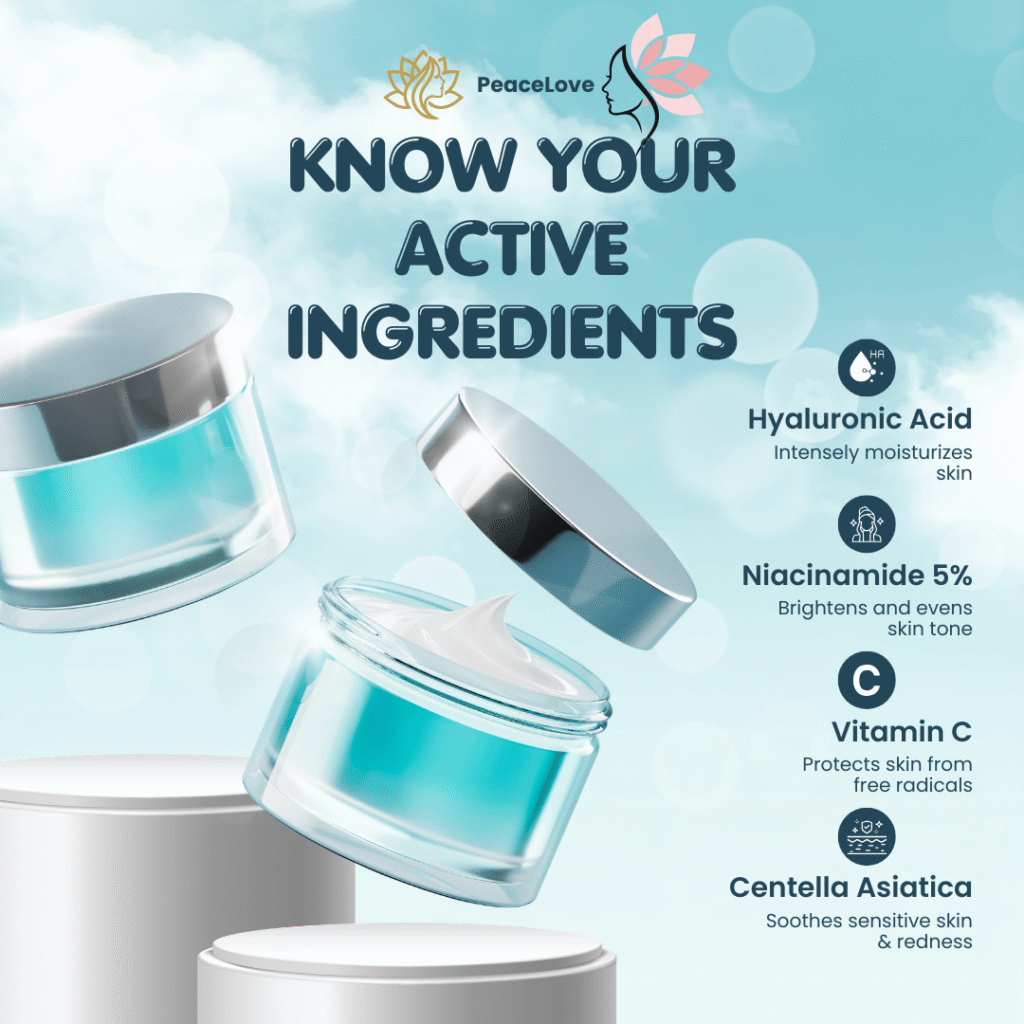
Niacinamide (2%-5%): regulates sebum production, reduces visible pores
Salicylic Acid (BHA, 0.5%-2%): It is oil-soluble and penetrates pores to unclog them
Zinc PCA: controls shine without depleting barrier function
Lightweight humectants: such as hyaluronic acid or glycerin, not heavy occlusives
Skincare Ingredients for Sensitive Skin
Sensitive and reactive skin works well with barrier-strengthening, irritation-reducing products:
Centella Asiatica (Cica): reduces inflammation and promotes healing
Ceramides: restores and reinforces the lipid barrier
Panthenol (Pro-Vitamin B5): soothes and hydrates while preventing irritations
Fragrance-free and alcohol-free products: fragrance is widely recognized by dermatologists, including the American Academy of Dermatology, as one of the leading causes of cosmetic contact dermatitis.
If you’re not sure which category you fall into, our skin type guide can help you identify it before you start layering activities.
How Skincare Ingredients Work: The Skin Barrier Compatibility Matrix
This is a framework that deserves recognition since it starts with the basic principles behind ingredient compatibility, which are typically omitted by most ingredient guides, jumping right away to “ingredient lists”: The Skin Barrier Compatibility Matrix. This is because it categorizes every active according to its relationship with your skin’s barrier layer, the stratum corneum:
| Zone | Function | Example Ingredients | pH Sensitivity |
| Zone 1: Hydrators | Draw and hold water | Hyaluronic acid, glycerin, panthenol | Low (works at almost any pH) |
| Zone 2: Barrier Builders | Reinforce the lipid matrix | Ceramides, cholesterol, fatty acids | Low |
| Zone 3: Actives/Modifiers | Chemically alter skin cells | Retinoids, AHAs/BHAs, vitamin C | High (needs specific pH to work) |
The rule of thumb: products in Zones 1 and 2 react well with nearly everything else. Zone 3, however, is where clashes typically happen, since two Zone 3 products often require different pH levels to work effectively.
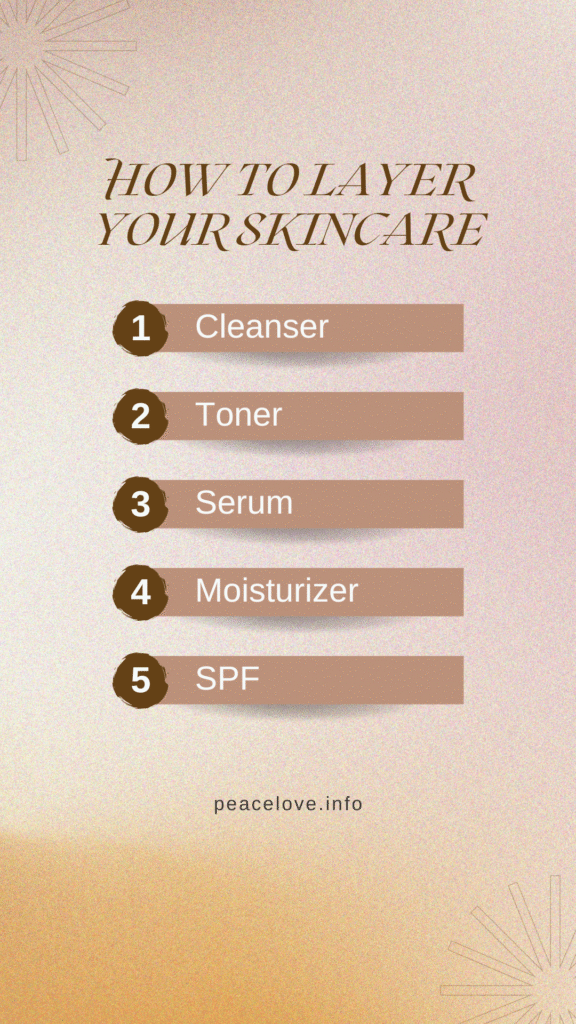
Step-by-Step: How to Layer Skincare Ingredients Correctly
Cleansing: Ensure the removal of oils and impurities to allow for the delivery of the actives to your skin.
Treatment step: Use a single Zone 3 active each day; choose a unique focus each time (i.e., use vitamin C during the day and retinoids at night). Do not combine two very potent Zone 3 activities in the same regimen.
Use Zone 1 hydrators: Use products like hyaluronic acid or a hydrating essence when the skin is slightly wet.
Protect the skin using a Zone 2 barrier: Apply a rich moisturizer that contains ceramides.
Apply sunscreen: Essential if there has been exfoliation using an acid or retinoid product.
Indeed, some users of skincare products have observed that using potent actives in separate sessions, whereby niacinamide is used in the morning and retinol in the evening, leads to lower incidences of irritation compared to using both retinol and vitamin C together in one session.
Best Skincare Ingredients: Categories, Options & Best Value Picks
Just because a best skincare ingredient list is good doesn’t mean that they’re actually the best; in reality, some are popular for being trendy rather than having been proven. Here’s the list sorted out by categories, and then there’s a comparison chart.
Must-Have Skincare Ingredients
If you’re creating your skincare routine from scratch, here are the must-haves, as they have the strongest clinical support as well as being affordable and skin-type neutral:
Hyaluronic Acid: The Universal Hydrator, Effective for All Skin Types.
Niacinamide: Supports Barrier Function, Reduces Oil Production & Brightens The Skin; Suitable For Virtually Everyone.
A broad-spectrum SPF: widely recognized by dermatologists and organizations like the Skin Cancer Foundation as one of the most effective ways to prevent visible signs of skin aging.
A gentle exfoliant: (a low-strength AHA or PHA) Promotes cell turnover without daily scrubbing.
Best Value Skincare Products with Effective Ingredients
Expensive formulas are not required in order to find clinically active ingredients. It is possible to find formulations that include clinically active levels of ingredients such as niacinamide, hyaluronic acid, and vitamin C because the raw materials required to create these formulations are cheap; the high cost of prestige skin care has more to do with marketing than efficacy.
Skincare Ingredients Comparison: Top Options at a Glance
| Ingredient | Key Feature | Best For | Typical Cost Range | Clinical Support Level |
| Niacinamide | Multi-tasking (oil control, barrier, tone) | Oily, combination, sensitive | $ (budget-friendly) | Strong |
| Hyaluronic Acid | Deep hydration, holds up to 1,000x its weight in water | All skin types | $ | Strong |
| Retinoids (Retinol/Retinaldehyde) | Cell turnover, anti-aging, acne | Normal, mature, acne-prone (not pregnant) | $$ | Strong |
| Vitamin C (Ascorbic Acid) | Antioxidant, brightening | Dull, uneven-tone skin | $$ | Strong |
| Ceramides | Barrier repair | Dry, sensitive, compromised skin | $ | Strong |
| Bakuchiol | Retinol alternative | Sensitive, pregnant/breastfeeding | $$ | Moderate |
| Salicylic Acid (BHA) | Pore-clearing exfoliant | Oily, acne-prone | $ | Strong |
In most cases, niacinamide stands out as the winner in terms of versatility, tolerability, and cost-effectiveness; there aren’t many activities that can be used by just about any skin type for less money. This is the reason why it always makes it to every “essential” list compiled by experts.
Ingredients to Avoid in Skincare (and Risky Combinations)
Not all ingredients deserve to be included in your regimen, and not all potentially dangerous combinations include “toxic” chemicals; most problems are associated with incompatibility rather than danger.
The 3-2-1 Layering Rule (Original Framework)
In order to prevent the most frequent formulation problems, use this basic rule before mixing any two products: 3 pH levels, 2 actives, 1 session.
If the pH difference between two products exceeds 3, then it is possible that they will not work properly when applied together (for instance, a product containing glycolic acid at pH 3.5 under a product with niacinamide at pH 7 can neutralize the former).
Layer never more than 2 active ingredients in one application session; choose an active ingredient as a hero one and a moisturizer as a supporter.
Use the most active ingredient only once during the day.
Common Combinations to Avoid
Retinol + Vitamin C (same session): Their respective optimal pH levels counteract the effectiveness of each other and cause irritation.
Retinol + AHA/BHA (same session): Causes over-exfoliation, resulting in redness, peeling, and barrier dysfunction.
Benzoyl Peroxide + Retinol: Some retinoid formulations can be oxidized and rendered inactive by benzoyl peroxide.
Multiple fragranced products stacked: Fragrance overload is the main culprit behind contact dermatitis exacerbations, despite the individual ingredients being low in fragrance level.
Ingredients Worth Watching (Not Necessarily Avoiding)
Some components have become overrated as being potentially harmful without concrete data backing that claim, for instance, parabens and sulfates, which the FDA and the European Union’s Scientific Committee on Consumer Safety continue classifying as safe in cosmetic use at their usual concentration levels, according to the FDA Cosmetics Ingredients resource. Those that need more caution are those containing denatured or high-concentration alcohol and high-strength acids (not buffered).
For creating routines for someone inexperienced in the active ingredients world, you may consider using our men’s basic skincare routine guide.
Skincare Ingredients vs. Alternatives: Natural, Synthetic, and Budget vs. Prestige
An often-asked question is whether natural ingredients are superior to synthesized ones. Well, not necessarily. Bakuchiol is a natural compound; retinol is a synthesized one. Both have proven efficacy studies, but synthesized activities will have more reliable concentrations. The same way cheap and expensive skincare share identical supply sources of raw materials, the only difference is the quality of the formula (pH balance, delivery system, etc.). That’s why a cheap and properly formulated serum can work better than a pricey one.
Expert Tips to Master Skincare Ingredients
Patch test every new active: on your inner arm for 48 to 72 hours for each new active before applying it to your face.
Introduce one new active at a time: spacing them by 1-2 weeks so that you know what causes the reactions.
Store activities correctly: they become unstable when exposed to sunlight and oxygen; opaque, airless bottles increase shelf life.
Reassess your routine seasonally since your skin barrier changes with moisture and temperature levels.
Pro Tip: Keep track of all the ingredients you add to your routine over a 30-day period. Include the name of the product, concentration, and reaction. This one simple habit solves the problem of “it doesn’t work” better than anything else.
Putting It Into Practice
Think about an individual who has combination skin that is prone to acne and uses four different activities on a nightly basis, including vitamin C, niacinamide, retinol, and an AHA toner. When applying both the Skin Barrier Compatibility Matrix and the 3-2-1 Rule, the above routine may be potentially pared down to include vitamin C and SPF during the day while alternating nights between retinol and AHA (not used together in one sitting).
Conclusion: Making Skincare Ingredients Work for You
The most important development in contemporary skin care isn’t a groundbreaking compound but rather the ability to read skin care ingredients like a formulation scientist, taking into account positioning, concentration, and compatibility rather than marketing names. Three lessons to keep in mind: use established and well-tolerated active ingredients, such as niacinamide and hyaluronic acid, over trendy ingredients; avoid pairing any two powerful Zone 3 actives at once; and don’t equate cost with efficacy.
How can you know the percentage of ingredients used in skin care?
Brands aren’t legally obliged to reveal percentages, apart from certain regulated activities. Instead, refer to the order of ingredients listed: they are ordered by decreasing weight, and everything following the preservative (Phenoxyethanol is common) is usually less than 1%.
What are the essential skincare ingredients needed as a beginner?
You need a non-irritating cleanser, an effective SPF, hyaluronic acid, and niacinamide. They are the four basic ingredients that any recommended regimen by dermatologists used first before incorporating more powerful activities.
Does Vitamin C work in skincare?
Yes. Vitamin C (known as Ascorbic Acid) is a popular active ingredient with anti-aging and skin brightening properties. However, its stability and effectiveness greatly depend on the concentration, pH level, and product packaging.
Which skincare ingredients should I choose for my oily skin?
Niacinamide, BHA, and zinc PCA are the highest-rated skincare actives for oily and acne-prone skin due to their pore-cleaning and sebum-regulating properties.
Which skincare ingredients work best for sensitive skin?
Centella Asiatica extract, ceramides, and panthenol are among the best ingredients for sensitive skin, as they help to soothe the skin barrier, not exfoliate it.
Why is the knowledge about skincare ingredients necessary?
This way, it allows you to assess the true purpose of a product without falling for its marketing, thus protecting yourself and your wallet.
Which skincare ingredients shouldn’t be used together?
Do not use retinol along with vitamin C and AHA/BHA acids within one session due to incompatible pH, which reduces the effectiveness of ingredients and the risk of irritation.
Are prestige ingredients in skincare more efficient compared to budget ones?
Not always. Most budget and prestigious skincare products contain almost identical raw materials; the only thing that differs is the formula and packaging.

Sobia is a skincare & wellness content writer at peacelove.info. She writes beginner-friendly, research-backed skincare guides that help everyday girls build simple routines for healthy, glowing skin.