Everybody believes that glowing skin requires pricey treatments and extensive care. But this isn’t always the case; a proper morning skincare routine requires just two components: protection and prevention. The goal is to shield the skin from daily harm and prevent potential issues beforehand.
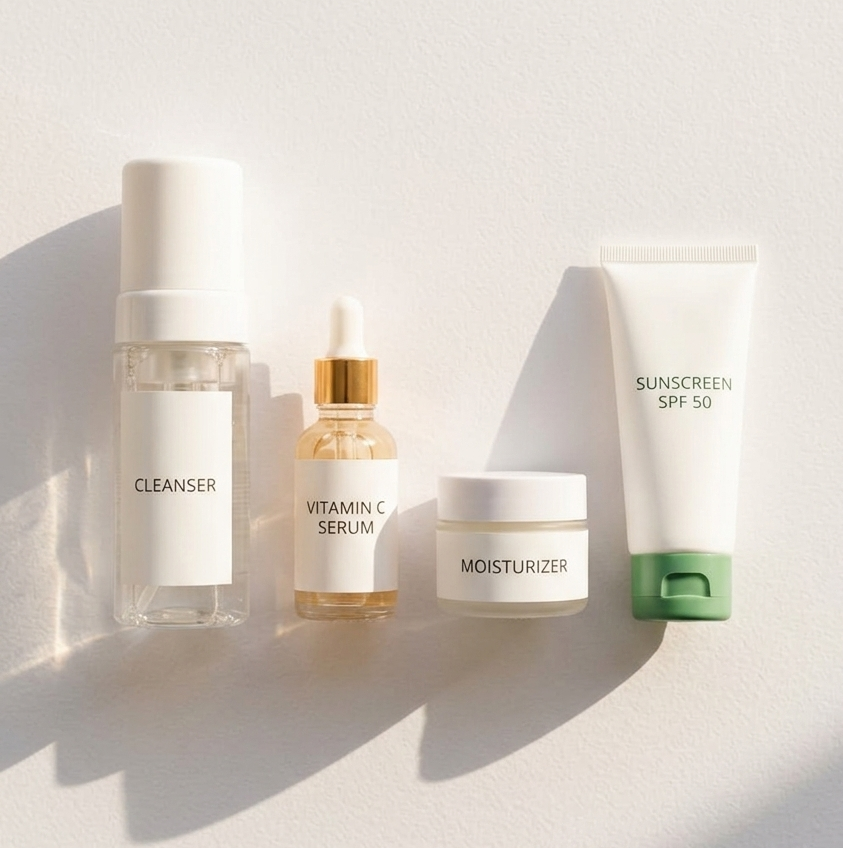
The good news is that this is all achievable within five simple steps. Instead of a ten-step routine and an intimidating collection of cosmetics, one only needs five basic steps performed on a regular basis in order to notice positive changes quickly. This guide will explain each step briefly but thoroughly.
Why a Morning Skincare Routine Is Different from a Night Routine
The function of your skin changes based on whether it’s daytime or nighttime. While at nighttime it takes care of the healing process, during the day it requires preparation in terms of protection against the sun, dust, pollutants, and stress.
Therefore, the final step in your daily skincare routine has to be applying sunscreen. All of the other steps of your daily skincare routine lead to applying sunscreen at the end of it.
1: Cleanser
The first thing you need to do daily in the morning is wash your face. During the night, your skin secretes oils, exfoliates itself, and accumulates dust from your bed. Applying makeup without washing means you apply everything on the residue, making your skincare routine ineffective.
Choose an appropriate, non-sulfate cleanser based on your skin type. Choose gel if you have oily or combination skin and use cream or milk cleansers for dry or sensitive skin. Cleanse using only warm water and not hot, and rub the cleanser into your face using your fingertips. Pat dry using a soft towel; never rub.
If you have very dry skin, and it feels comfortable in the morning, you might cleanse your face with warm water instead of using cleanser. It’s absolutely fine because it prevents stripping of the skin.
2: Toner (Optional)
The toner is a thin solution applied immediately after cleansing. The toner helps restore the balance of your skin pH after cleansing and readies the skin for further absorption of other products applied afterwards.
It is an optional step in a skincare routine, yet recommended if your skin looks or feels uncomfortable after washing. Use a gentle toner containing moisturizing substances such as hyaluronic acid or niacinamide and apply it using a cotton pad or your hands on the skin surface.
Do not use toners with large percentages of alcohol and perfumes; such solutions will be more harmful than useful to your skin. It is recommended to use palms to press toner onto the skin. Thus, less product will be wasted, and it will penetrate better.
3: Serum
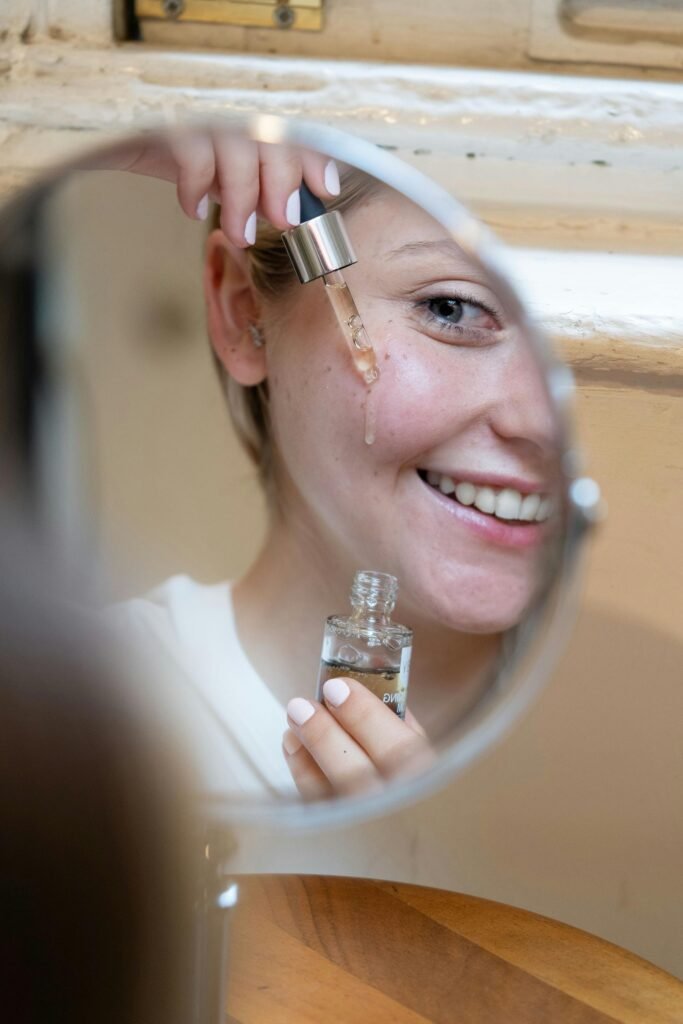
Serum is where your skin problem is addressed. They are light in texture and highly concentrated; thus, they are able to penetrate the skin better than any cream.
Vitamin C serum is highly recommended during the day, as it helps brighten your skin tone, reduces dark patches on the face, improves skin pigmentation, and also increases sun protection. Only three or four drops will do; just pat it into the skin.
However, in case vitamin C is not what you are looking for, go for a niacinamide serum, as it regulates sebum production, tightens large pores, and reduces skin redness. Works well with almost all skin types.
In the beginning, only pick one serum for your skin at a time.
Eye Cream (Optional but Worth It)
Your eyelids’ skin is the thinnest skin on your face, and it gives you hints about fatigue, aging, and dehydration much earlier than the rest of your facial skin does. This is the reason for the existence of such a cosmetic product as eye cream.
It does not necessarily have to be a pricey item; even a light cream used once a day in the morning can reduce any puffiness and dehydration around the eyes and, over time, dark circles and fine lines as well.
Here is the trick: you should never rub or pull your eye area skin; you should only gently pat the area using your ring finger since it is the one that applies minimal pressure. Very little amounts are required.
If you are a beginner and would like to keep things as simple as possible, then this step is optional; however, if you have dark circles or any kind of puffiness bothering you, it may really help.
4: Mousturiser
Even though your skin feels oily during the day, make sure you apply moisturizer after cleansing. If your skin is dehydrated, it will actually secrete more oils to protect itself. Moisturizers help balance oil secretion and keep the skin barrier intact.
The texture of your moisturizer should depend on the condition of your skin: oily skin calls for gels or aqueous products, dry skin will benefit from heavy creams, and for combination skin, light lotions are ideal.
While applying your moisturizer, make sure your skin is slightly damp after the previous step of toning or applying a serum. This will increase the effectiveness of moisturizing. Make sure you apply moisturizer to your face and neck at the same time.
There is one trick most people tend to overlook: when you have oily skin and use very hydrating sunscreen, you can actually skip the step of moisturizer application.
5: Sunscreen (The Most Important Step)
Sun protection is mandatory. Applying sunscreen daily is the key point of your morning skincare regime; otherwise, it means that all the other efforts are going down the drain.
UVA and UVB radiation cause early aging, age spots, and discolored and damaged skin. Your skin encounters them regularly, not only when the weather is warm or there are any visible signs of sunshine. They come through windows and cloud cover.
Apply broad-spectrum SPF 30 or higher daily without fail. Spread it abundantly, around two fingers of the product to be more precise. Do not neglect to apply it to your ears, the back of your hands, and your neck, since they get exposed to the sun more often.
In case you are going to put something else on, apply the sunscreen first and give it three to five minutes to set properly to prevent the formation of a pill-like effect.
One more piece of advice for you to keep in mind: do not neglect applying the SPF lip balm, too. The lips are exposed to the sunlight the same way the other parts of your face are. As per the American Academy of Dermatology, a broad spectrum of at least SPF 30 sunscreen should be used daily.
H2: Quick Morning Routine Summary
| Step | Product | Who Needs It |
| 1 | Gentle cleanser | Everyone |
| 2 | Alcohol-free toner | Optional, helpful for most |
| 3 | Vitamin C or niacinamide serum | Everyone |
| 4 | Lightweight moisturizer | Everyone |
| 5 | SPF 30+ sunscreen | Everyone, no exceptions |
TIPs for an Effective Morning Skincare Routine
Allow three to five minutes for the sunscreen to dry before putting on your makeup. This will help the sunscreen settle and not mix with your foundation cream.
Apply skincare products in ascending order. Start with toner, followed by serum, moisturizer, and finally sunscreen. By doing so, the products absorb properly and don’t block the absorption of other products.
Don’t forget the neck and hands. These parts show signs of aging earlier than any other part of the face and tend to be neglected in morning skincare routines.
Consistency is key. Don’t expect immediate results when using a new skincare routine. Let it run its course and give it at least four to six weeks.
Final thought:
A morning skincare routine does not necessarily have to be complex or costly to achieve great results. Only five steps, the proper skin care products, and consistency are required. Cleansing, toning if preferred, treating with a serum, moisturizing, and last but definitely not least, applying sunblock should be included.
Performing these five steps daily will reward you with healthy skin.
The above article is written for educational purposes only. It is advisable to seek the assistance of a dermatologist if you have chronic skin problems.
Can I avoid using cleanser in the mornings if I have dry skin?
Yes. In case your skin feels clean and is not oily upon waking up, just rinsing it with lukewarm water will do. Excessive cleansing dries out your skin by removing its natural oils.
Is it necessary to use serum, or can I forgo it?
Serum is an extra step that is highly recommended, although completely optional. In case you wish to go easy on your skincare routine, using a cleanser, moisturizer, and sunscreen will suffice at first.
Can I use the same moisturizer during the daytime and at night?
Yes, as long as it works for your skin. All you need to know is that day requires sunscreen, and night does not require any sunscreen at all. Many people like to use a light moisturizer in the morning while using a heavy moisturizer at night.
How much time should my morning skincare routine take?
A five-step morning skincare routine should take five to ten minutes. The only thing you have to remember is giving enough time to absorb each product before applying the other.
Is SPF 30 sufficient, or is SPF 50 required?
An SPF of 30 will block about 97 percent of UV radiation and is more than enough for your daily routine. On the other hand, SPF 50 provides a little bit extra protection and may be appropriate for those spending lots of time outdoors.

Sobia is a skincare & wellness content writer at peacelove.info. She writes beginner-friendly, research-backed skincare guides that help everyday girls build simple routines for healthy, glowing skin.